DNA Testing
Citizens Collect DNA to Support Better Seafood Labelling in Canada
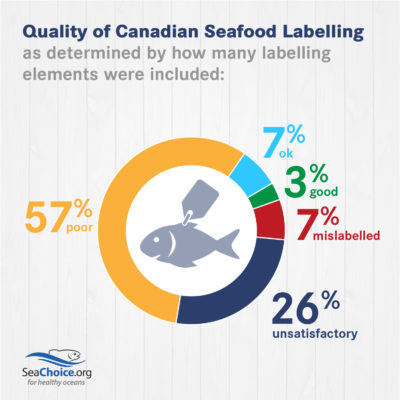
SeaChoice led a citizen science research project that found on-package seafood labels in Canadian retail stores generally lack critical information to allow consumers to make informed purchases. Actual label fraud (species substitution), however, was found to be minimal.
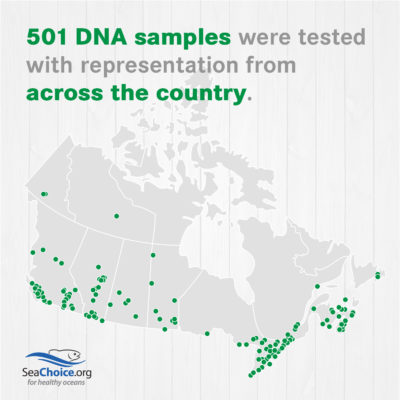
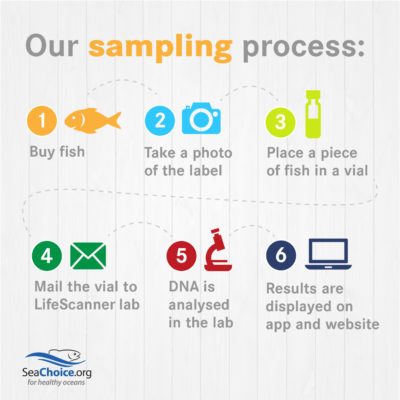
After analysing the results of our report Canadians Eating in the Dark: A Report Card of International Seafood Labelling Requirements, SeaChoice wanted to find out how retailers across the country were labelling their seafood, despite having to follow weak regulations. We also wanted to identify the DNA of seafood, to find out if retailers were accurately labelling seafood species according to Canadian regulations.
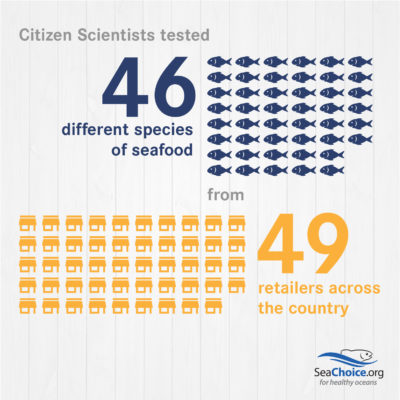
In Spring 2017, SeaChoice partnered with the University of Guelph Centre for Biodiversity Genomics’ Life Scanner program and engaged 300 volunteer “citizen scientists” across Canada. Each citizen scientist was provided with two DNA collection vials, to sample seafood in their local grocery stores.
The results show that just one per cent of the seafood tested across Canada was not what the label said it was. Seven per cent of tested seafood was mislabelled — sold under a name that was not compliant with the Canadian Food Inspection Agency’s labelling regulations.
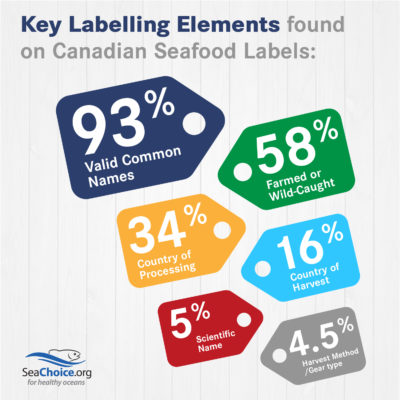
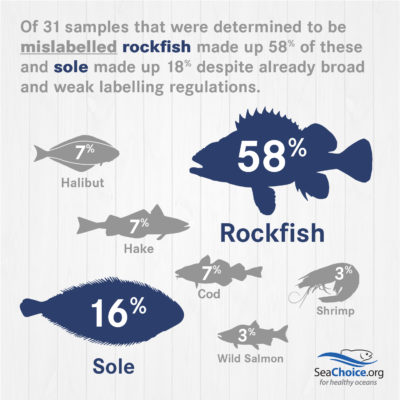
SeaChoice has shared store-specific results with retailers, and we have followed up with the stores where mislabelling was found, to ensure it is rectified. Since our citizen scientists gathered a lot of data for us, we are currently undergoing a deeper analysis of our results, and plan to release a report of our findings in 2018.
Additional Resources:
LabelMySeafood.ca
Press release
LifeScanner portal for full results